

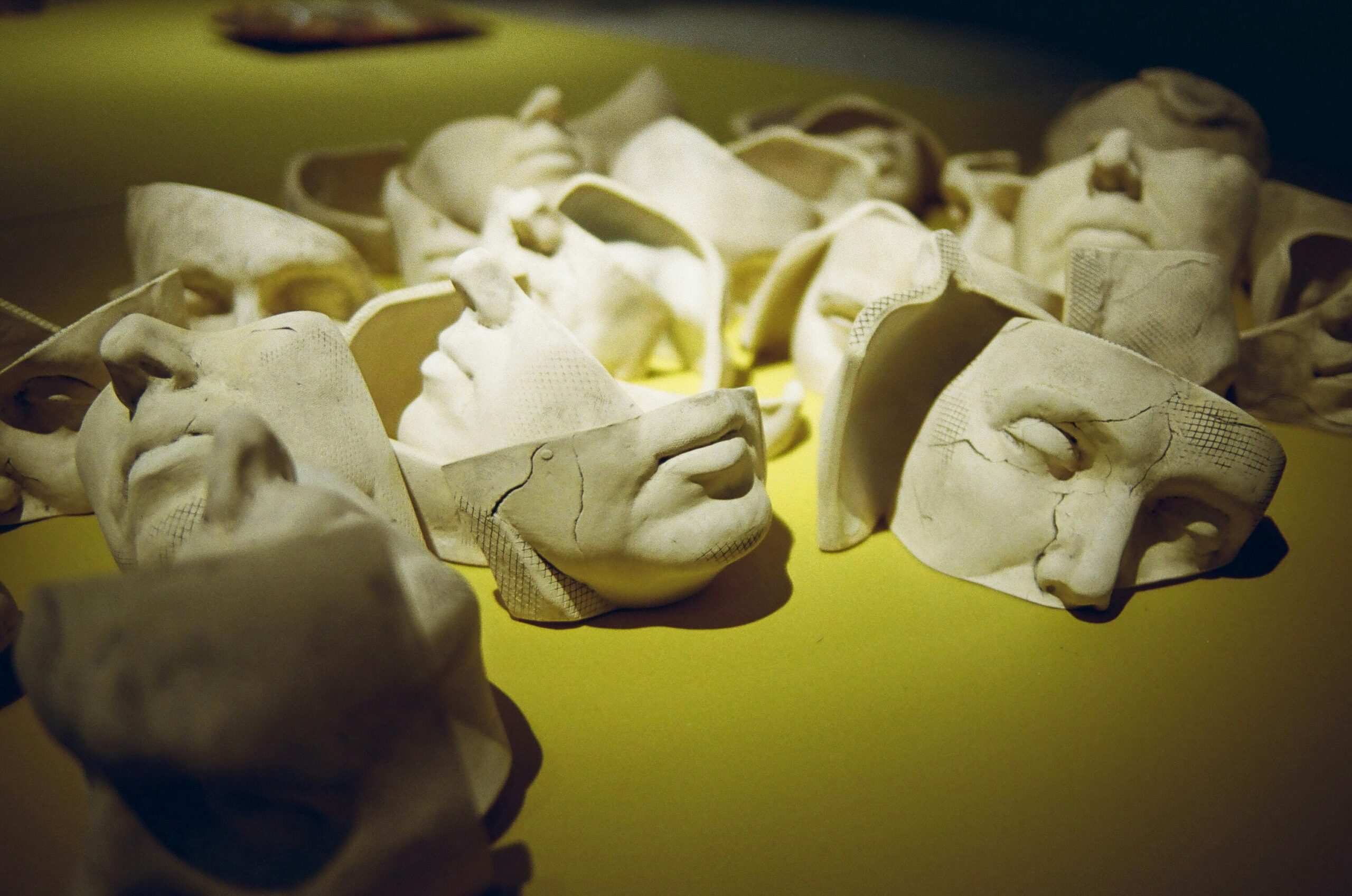
The holiday of Purim is many things at once: a story of survival, a reason to celebrate with carnivals for children, an excuse to bake cookies, and a time to dress in costumes. The costumes are worth focusing on, as they are more than colorful whimsy. Masks and costumes are about hiding identity. And at its roots, Purim is the story of identity, when to hide who we are, and when to reveal ourselves to others.
Most of the characters in the Book of Esther are connected to a hidden or private identity. Queen Vashti is sent away for her refusal to reveal herself at the King’s bidding to his court. Esther hides her Jewish faith, until it is necessary to reveal it. Mordechai hides his mentorship of Esther, and supports both her being hidden and not, until he gains power.
The most interesting character relationship to hidden identity is the one who doesn’t seem to hide it at all, Haman. He plots to destroy the Jewish people in the open and shows no hesitation to advertise his plans. In the Jewish imagination Haman represents the recurring threat to the Jewish people through history. He is associated with (and sometimes related to) everyone who seeks to destroy us.
This hate based behavior, it seems, does not feel the need to hide behind costumes. It is often explicit and thus it can be easily ignored. It is literally unbeliveable. When hate is proudly proclaimed, we must take it seriously.
We have in Esther a powerful example. She removes her “costume” of being the queen to reveal her true identity of being Jewish. The Jewish valve being used here is known as Ometz Lev. Translated as “heart strength” this is accessing the strength within ourselves to stand up, despite the fear we feel. Esther, to her credit and our benefit, tapped her Ometz Lev. She understood the explicit, and the hidden, and was able to find the strength to come before the King to reveal herself as Jewish. She took of her costume to save her people.
Perhaps there are a few lessons to be learned here. One, costumes / masks are sometimes necessary. We need not go exposed and raw into the world. Hiding our identity can be beneficial for survival and powerfully impactful for change.
Two, the value of Ometz Lev is available to all of us, at all times. This strength of heart is not an absence of fear. It is persevering despite the fear. We can all be Esther, and reveal our true strength when needed.
Three, not everyone wears costumes or hides their truest self. Sometimes, for better or worse, what you see is exactly what you get.
