

By Rabbi Alan and Rebecca Shavit-Lonstein
When we first moved to Colorado six years ago, we were struck by how deeply the state’s geology shapes its culture—from the athleticism inspired by mountain climbing, to the self-reliance born of wide-open spaces, to the blending of diverse cultures and species. Colorado’s unique ecosystems leave a lasting impression on all of us lucky enough to call Colorado home.
As the leaves begin to turn and the seasons shift, the Jewish calendar brings us to Sukkot. This seven-day harvest festival offers both agricultural and spiritual lessons—none more meaningful than those embodied in the lulav.
Traditionally, the lulav (plural: lulavim) is composed of four species: willow, myrtle, palm, and etrog. According to one rabbinic tradition, each represents a different type of person within the Jewish community—or even the different aspects of one person throughout their life.
The etrog symbolizes someone who is deeply connected to Judaism in both knowledge and action. The palm represents one who possesses knowledge but does not act upon it. The myrtle stands for those who live according to Jewish values even without extensive knowledge. And the willow represents those who neither act upon nor understand these values—yet are still equally part of the community. By binding these four species together, we represent the Jewish people—celebrating our many parts, our harvest, and our enduring spirit.
These species were likely chosen not only for their symbolism but also for their availability in the ancient Middle East. Waving them in six directions affirms that the true strength of the Jewish people comes from our diversity.
And diversity is something Colorado has in abundance. From plains and foothills to high mountains and alpine tundra, our state encompasses a variety of ecosystems. That led us to wonder: What would a Colorado lulav look like? Could we gather symbolic species from each ecosystem to represent different approaches to life?
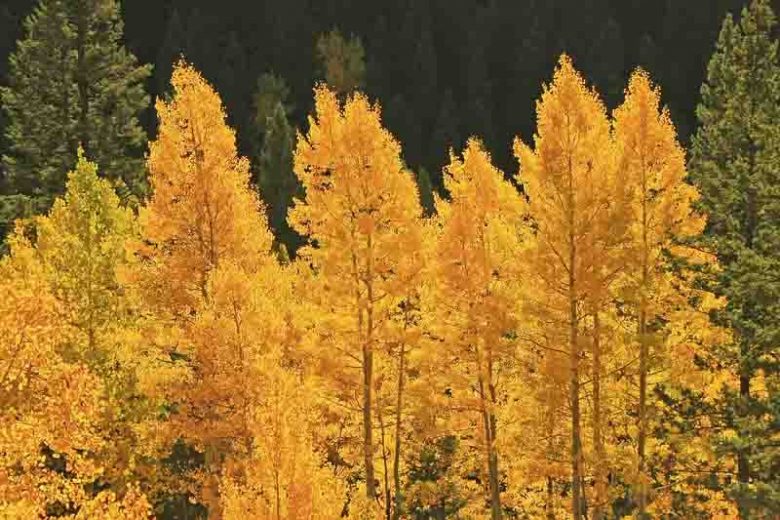
In the traditional lulav, the palm frond forms the backbone. In our Colorado version, we might replace it with the Quaking Aspen, found primarily in the high mountains. With its shimmering leaves—especially radiant around Sukkot—this tree stabilizes the ecosystem, providing shade, preventing erosion, aiding forest regeneration, and absorbing carbon dioxide. It represents the person who, even in challenging times, supports the community and stands tall as an example for others.
The myrtle, whose leaves are shaped like eyes, can be symbolized by the Rocky Mountain Columbine, found in the plains and foothills. With its upward-facing blossoms in shades of purple, white, and yellow, it stretches toward the sun, reaching beyond the surrounding foliage. It represents the person who always looks ahead, seeing beauty and possibility in the world around them.
The willow, whose leaves are shaped like lips, might be represented by the Alpine Forget-Me-Not, a small but resilient flower thriving in the harsh alpine tundra. It symbolizes those who endure and flourish even under the most difficult conditions.
Finally, in place of the etrog, which is heart-shaped and fragrant, we offer the Palisade Peach—Colorado’s most anticipated fruit. Sweet, vibrant, and eagerly awaited at summer’s end, it represents those who have the patience to wait for the right moment and the courage to embrace opportunity when it arrives.
Sukkot invites us to focus on community, family, and the cycles of the earth—growth, decay, and renewal. This grounded perspective feels especially meaningful after the grandeur of the High Holidays. By imagining a Colorado lulav drawn from our state’s bioregions, we root ourselves more deeply in this land. We remember that this place is our home, that our actions here matter, and that—like a thriving ecosystem—a strong community depends on all the diverse parts that make it up.

I love how you connect the lulav’s natural elements with Colorado’s geology, open spaces, and diverse ecosystems. Framing Sukkot through the landscape that shapes daily life makes the holiday feel especially grounded and local.
I love the connection between Colorado’s diverse ecosystems and the lulav’s celebration of the natural world. Framing Sukkot through mountain landscapes, wide-open spaces, and the seasonal shift makes the holiday feel especially rooted in Colorado.
I love the connection between Colorado’s mountain-shaped culture and the lulav’s celebration of the natural world. Framing Sukkot through the state’s changing seasons and diverse ecosystems makes the holiday feel especially rooted in place.
I love how you connect Colorado’s geology, ecosystems, and culture to the symbolism of the lulav. The idea that wide-open spaces and diverse species can deepen our experience of the Jewish calendar feels especially fitting as Sukkot approaches.
I love the way you connect Colorado’s geology and ecosystems with the symbolism of the lulav. Framing Sukkot through the state’s mountains, open spaces, and diverse species makes the seasonal transition feel especially vivid and local.
I love how you connect Colorado’s geology and diverse ecosystems with the symbolism of the lulav. Framing Sukkot through mountain landscapes, wide-open spaces, and seasonal change makes the Jewish calendar feel especially rooted in place.